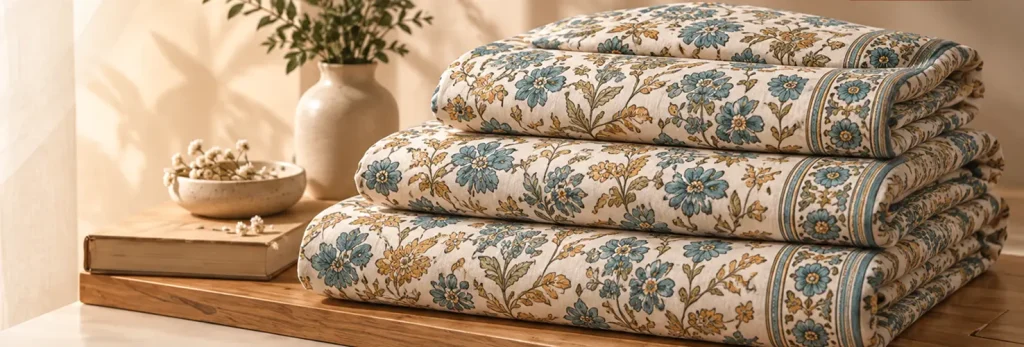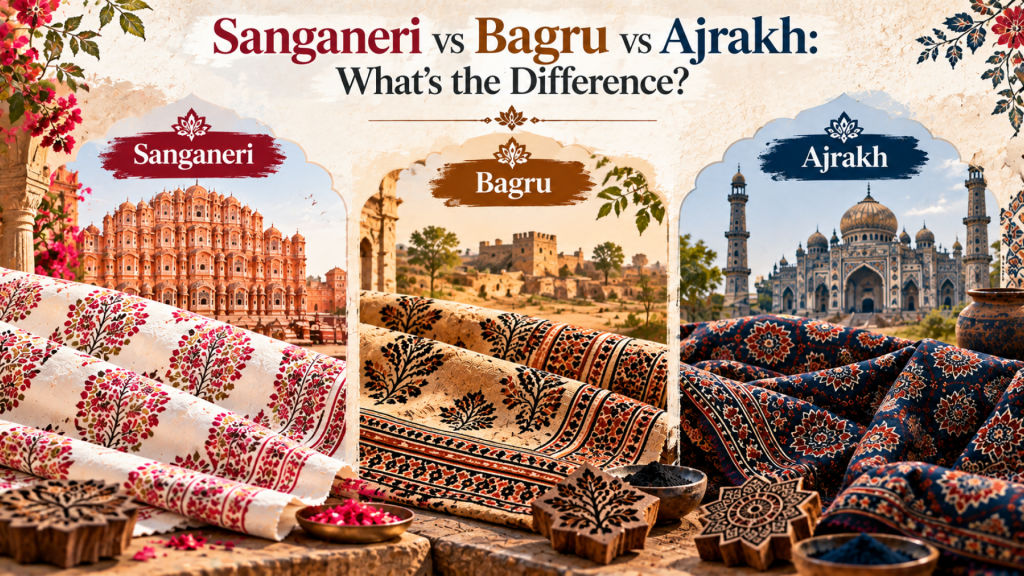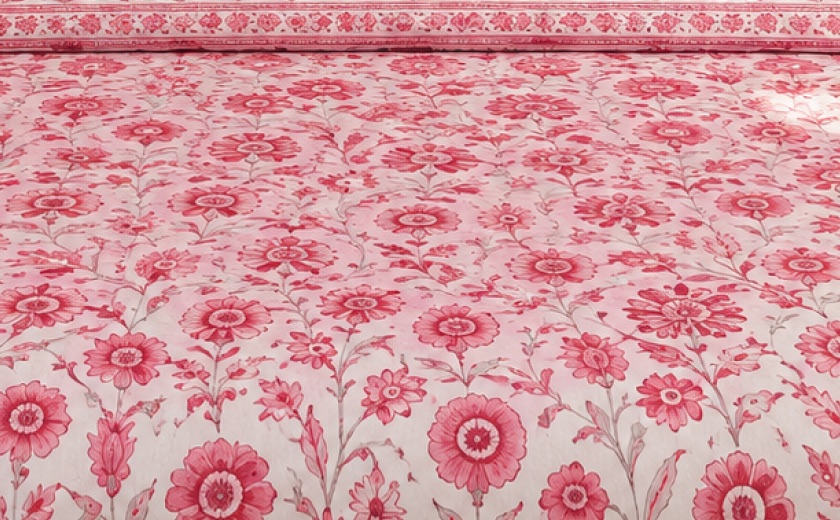








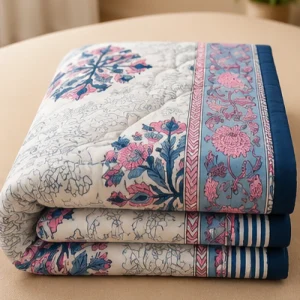
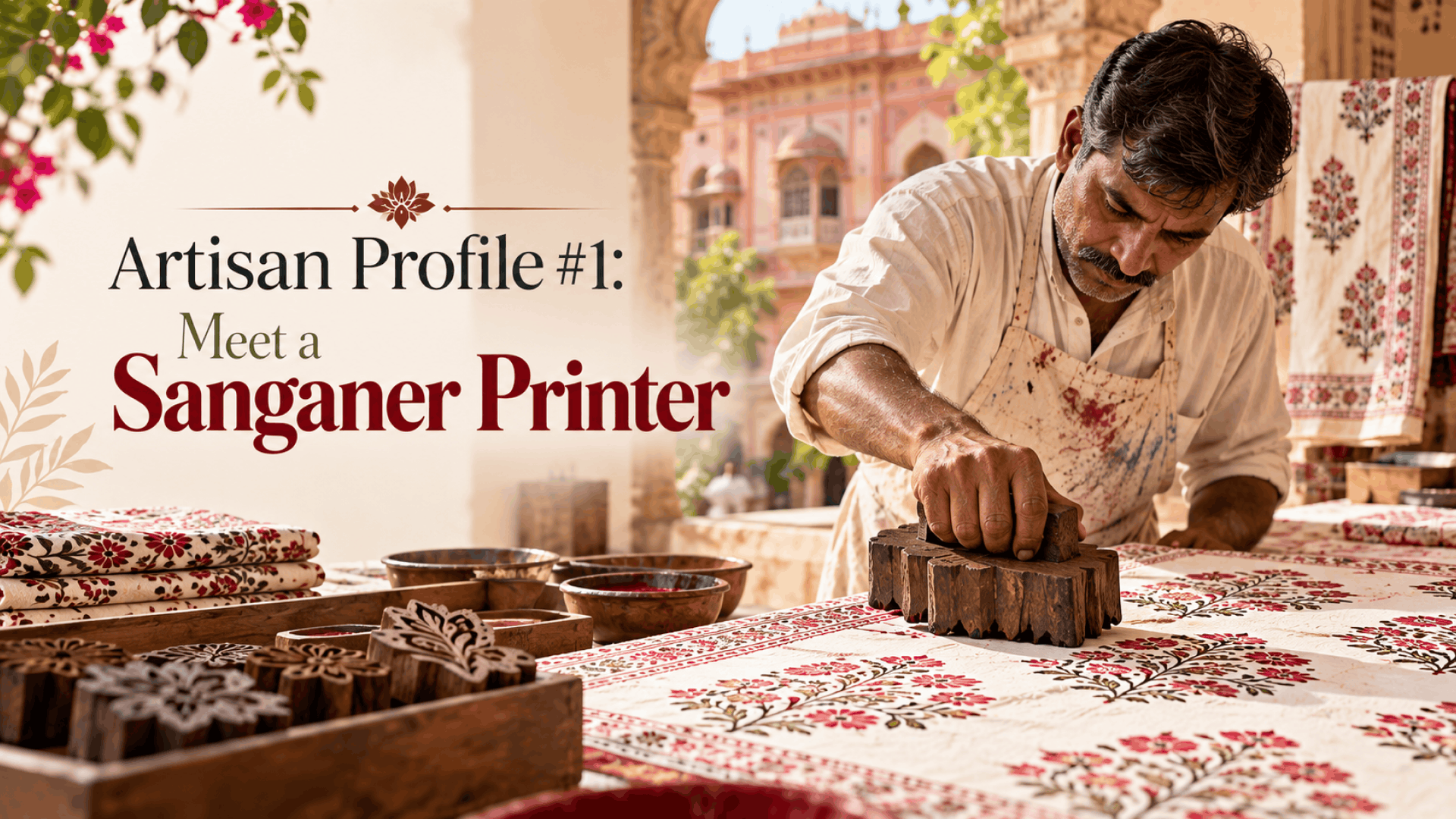
Walk into a traditional printing workshop in Sanganer, and you quickly notice the rhythm of the craft..
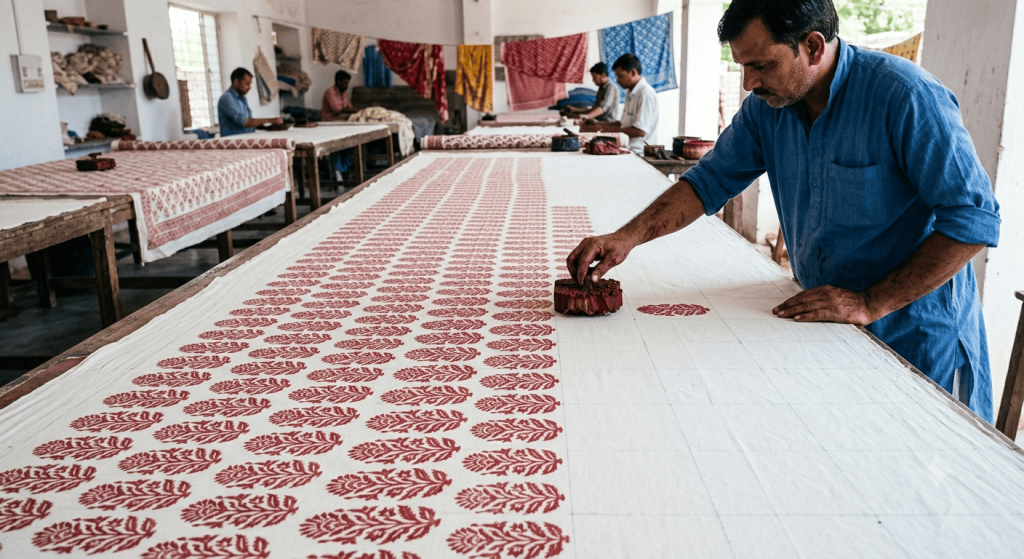
A wooden block is pressed onto the fabric, lifted, re-inked, and pressed again..
For Ramesh Lal, a Sanganer hand block printer with more than 30 years of experience, this rhythm has been part of his working life for decades..
He learned the craft through hands-on practice and has spent years working with carved wooden blocks, colours and repeating textile patterns..
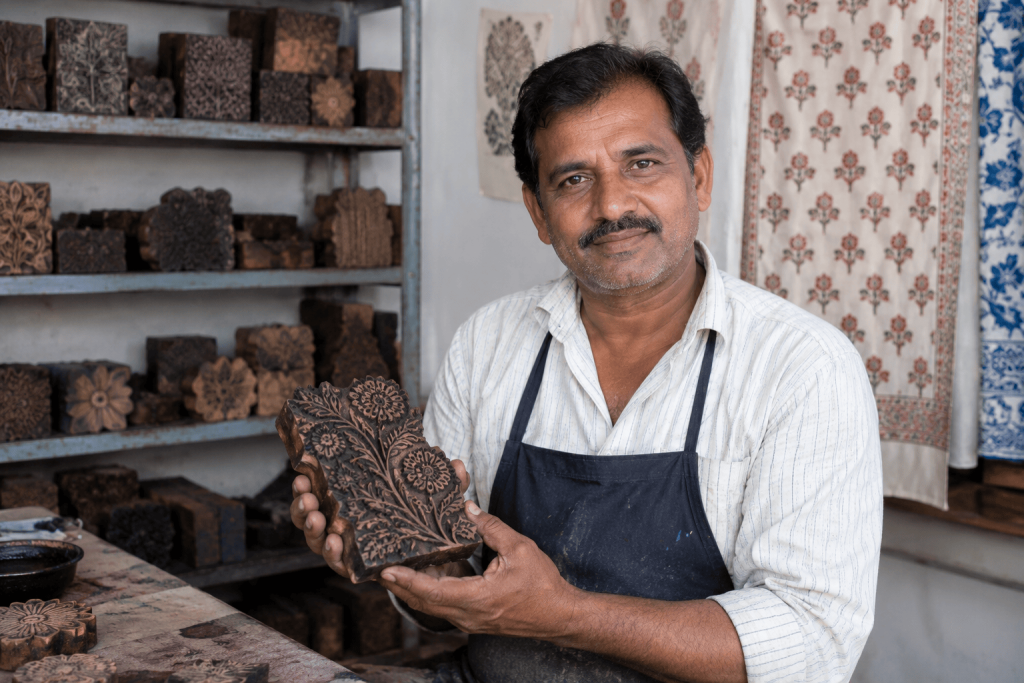
We spoke with Ramesh about what really goes into creating a hand-block printed bedsheet.
“When you have been doing this work for many years, your hands understand the block before you even think about the next impression.”
Q: When you first start printing a bedsheet, what do you look at?
Ramesh Lal:
Before I touch the fabric, I look at the block.
The block has to sit properly in my hand. The carved design needs to be clean, and the surface should take the colour evenly.
If the block is not right, even an experienced printer will struggle to get a clean impression
“One design can need several blocks”
Q: Is one wooden block enough for a complete design?
Ramesh Lal:
Usually, no.
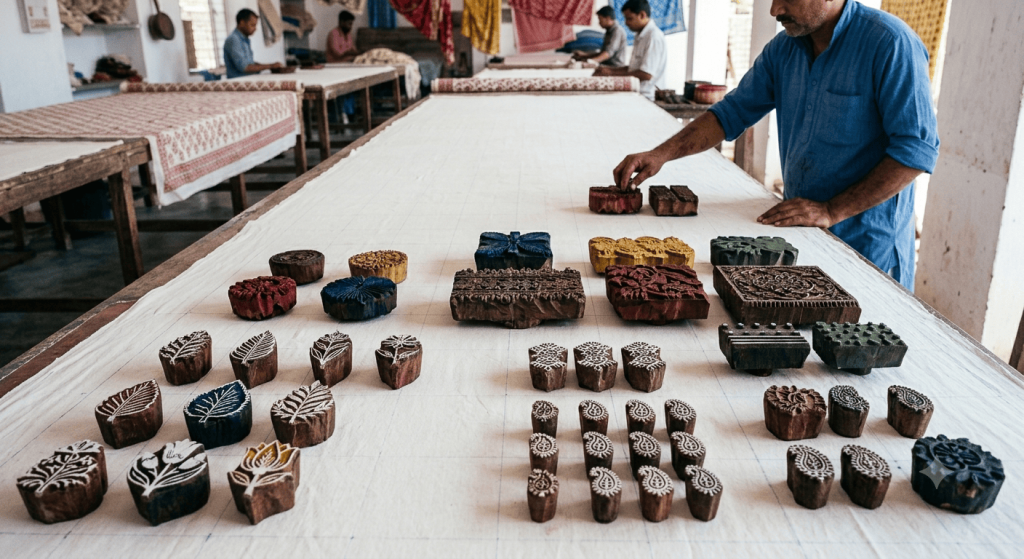
When a design has several colours, we use separate blocks for different parts of the pattern.
One block may create the outline while another fills in a particular colour.
The difficult part is keeping everything aligned.
Every impression has to meet the previous one correctly. There is no machine correcting theplacement for me. I have to judge it while printing.
“The fabric cannot move”
Q: What happens if the fabric shifts while you are printing?
Ramesh Lal
The pattern can go wrong very quickly.
That is why the fabric needs to be prepared properly and placed securely on the printing table.
Once I begin, I work across the fabric carefully. The design has to continue at the right spacing from one impression to the next.

“Your eyes learn the pattern”
Q: How do you keep the design aligned without measuring every impression?
Ramesh Lal:
After working with the same type of blocks for years, your eyes begin to understand the spacing.
You see where the previous impression finishes and where the next one should fall.
Your hand develops its own rhythm. That comes with practice.
“Small differences are part of hand printing”
Q: Why can two hand-block impressions look slightly different?
Ramesh Lal:
Because every impression is made by hand.
The pressure can change slightly. The amount of colour can vary. The position can move a little.
When you print a large bedsheet, you repeat the design many times. Small variations can naturally appear.
That is different from a machine print where every repeat is designed to look exactly the same.
“Colour preparation is serious work”
Q: Is printing mainly about pressing the block onto the fabric?
Ramesh Lal:
No. Printing is only one part of the process.
The colour needs to be prepared properly, and the printing paste needs the right consistency.
If there is too much colour, the details may not appear clearly. If there is too little, the impression may look weak.
A printer needs to watch the colour throughout the work.
“The design tells us where to begin”
Q: What designs do you enjoy printing most?
Ramesh Lal:
I enjoy floral designs because they allow the detail of the block to show.
Flowers, leaves, vines and small repeated motifs can look simple when you see the finished bedsheet, but printing them across a large piece requires concentration.
Sanganeri textiles are particularly associated with delicate floral and nature-inspired motifs.
“A bedsheet is a large canvas”
Q: Is printing a bedsheet different from printing a smaller piece of fabric?
Ramesh Lal
The basic method is similar, but the size makes it more demanding. A bedsheet gives you a large area to cover.
The pattern has to remain balanced across the entire fabric. If the repeat slowly moves out of alignment, you can notice it easily on a large surface.
That is why concentration matters from the first impression to the last.
“The work continues after printing”
Q: What happens after the last block impression?
Ramesh Lal:
Look closely at the fabric.
Do not only look at the finished colour or pattern. Look at the individual motifs and how they repeat across the fabric.
Every impression represents a separate movement of the hand. Once you understand that, you see a hand-printed bedsheet differently.
“People see the bedsheet. We see every impression.”
Q: What do you wish customers understood about hand-block printed bedsheets?
Ramesh Lal:
The fabric is not finished just because the printing is finished.
Depending on the colours and printing process, the fabric goes through drying and other finishing stages.
Washing, drying and colour fixing are important before the fabric becomes ready for use.

Meet the Artisan
Name: Ramesh
Lal Experience: 30+ years
Craft: Sanganeri Hand Block Printing
Location: Sanganer, Jaipur, Rajasthan
Speciality: Floral and repeating hand-block designs
Traditional tools: Carved wooden blocks, printing table and textile printing colours
A Craft Built Through Practice
For Ramesh Lal, printing is not simply about putting a design onto fabric.
It is about controlling pressure, maintaining alignment, understanding colour and repeating the
same movement across metres of cloth.
That consistency comes from years of practice.
Sanganeri Hand Block Printing is a GI-recognized craft associated with Rajasthan and is used
for products including bedsheets, bed covers, curtains and other textiles.
Ready to bring one home?
.Explore our collection of Sanganeri Bedsheets Collection and check the listed dimensions before choosing your next Indian cotton or hand block print bedsheet..

Textile writer and craft historian based in Jaipur, documenting India's living block-print traditions.